ST. PETERSBURG COLLEGE (SPC) AND UNITED FACULTY OF FLORIDA (UFF)
A public meeting of representatives of SPC and UFF, to conduct negotiations for a Collective Bargaining Agreement, will be held on May 29, 2024 from 2:00 p.m. to 5:00 p.m. at the Epi Center, St. Petersburg College, 13805 58th Street North, Clearwater, Florida in room EP-BD1-451, 1-453.
Pursuant to the provisions of the Americans with Disabilities Act, any persons with disabilities requiring reasonable accommodations or assistance to participate should contact the Board Clerk at 727-341-3241 five (5) business days before the meeting date.
Posted in St. Petersburg College | Leave a Comment »
The College will celebrate all its students’ successes as they cross the stage this spring

St. Petersburg College will hold its 145th commencement ceremony on Wednesday, May 15, at Tropicana Field, 1 Tropicana Drive, St. Petersburg. The ceremony runs from 10 a.m. until noon.
The event will also be streamed live on the college’s YouTube channel.
With this graduating class, SPC has awarded 201,596 degrees since the college — Florida’s first community college and the first to offer bachelor’s degrees — was founded in 1927. In fact, in just four short years, SPC will celebrate its 100th anniversary with SPC Day, which honors when the College first opened its doors.
Spring 2024 graduates
SPC’s youngest Spring 2024 graduate is 16 years old, the oldest is 67 years old and seven graduates are over the age of 60. Exactly 200 graduates are the first in their families to graduate with a college degree. There are 179 Early College graduates and 146 Collegiate High Schools graduates.
SPC awarded 1,379 degrees and certificates this term:
- 798 Associate in Arts degrees
- 283 Associate in Science degrees
- 159 Bachelor of Applied Science degrees
- 163 Bachelor of Science degrees
- 3 certifications
SPC prides itself on offering more than 200 degrees, certificates and transfer programs, as well as many high-demand, high-skill, industry-recognized workforce certifications. Some of the top degrees awarded this term include:
- 80 Associate in Science in Nursing
- 43 Bachelor of Applied Science in Management and Organizational Leadership
- 34 Bachelor of Science in Business Administration
- 33 Bachelor of Science in Nursing
- 28 Bachelor of Applied Science in Health Services Administration
- 26 Bachelor of Science in Educational Studies and Community Leadership
- 25 Bachelor of Science in Elementary Education, K-6 with Infused ESOL and Reading Endorsements
- 22 Bachelor of Applied Science in Public Safety Administration
- 22 Bachelor of Applied Science in Technology Development and Management
- 21 Associate in Science in Dental Hygiene
First FAAME cohort
This spring graduation ceremony includes the first Florida African American Male Experience (FAAME) program cohort with seven graduates. This program provides a clear path toward degree completion and offers educational services. Students also receive scholarships for financial support. FAAME stemmed from SPC’s Brother to Brother program, partnering with Community Foundation Tampa Bay and Helios Education Foundation.
Fall 2023 graduates
Students who graduated in Fall 2023 will also cross the stage on May 15. This graduating class had 490 students who were the first in their families to graduate with a college degree. As if that wasn’t impressive enough, the youngest graduate was 16 years old and the oldest graduate was 71, with 12 grads being over the age of 60.
SPC awarded 2,149 degrees and certificates in Fall 2023:
- 774 Associate in Arts degrees
- 351 Associate in Science degrees
- 277 Bachelor of Applied Science degrees
- 184 Bachelor of Science degrees
- 563 certifications
For more information about the commencement, visit spcollege.edu/graduation.

Posted in commencement, graduates, graduation, St. Petersburg College | Tagged college, education, graduation, news, Scholarships | Leave a Comment »
Professor Jean Lee will serve as the Acting Dean for the College of Nursing at St. Petersburg College for the remainder of the 2023-2024 academic year and the upcoming 2024-2025 academic year. She will assume the role of Acting Dean on May 13.

Dr. Lee has been a nurse educator at SPC for over 15 years. Specializing in online education for nurses returning to school for their baccalaureate education, she has developed courses and curricula to meet national standards. She has also participated in multiple successful accreditation visits from the Commission on Collegiate Nursing Education.
She holds a Ph.D. in Nursing from the University of South Florida, focusing on research on health services and healthcare quality. Dr. Lee also obtained her MSN and BSN from the University of South Florida. As a registered nurse with over 30 years of experience, her expertise includes critical care, emphasizing medical, surgical, and trauma care.
Before her academic career, Jean held multiple positions in clinical practice including staff and charge nurse of a trauma-surgical intensive care unit even a hospital supervisor. Also, she is a member of Sigma Theta Tau International Honor Society of Nursing.
Dr. Lee has resided in the Tampa Bay area since the 1980s and volunteers with several organizations including the St. Pete Free Clinic, St. Vincent de Paul Cares, and Friends of Strays.
Posted in nursing | Tagged education, health, healthcare, nurse, nursing | Leave a Comment »
The Bilirakis College of Education at SPC continues its success under the new Dean’s leadership

St. Petersburg College is pleased to announce Dr. Heather Duncan has been named Dean of the Bilirakis College of Education at SPC starting on May 13.
Duncan is currently the Associate Dean of the College of Education at SPC. She is a dedicated and experienced educator who attended the University of Florida where she earned a bachelor’s degree in elementary education and a master’s degree in special education. She also holds a doctorate in curriculum and instruction from the University of South Florida, which she received in 2009.
“I am privileged and honored to have been selected for this important role within the College of Education at St. Petersburg College. Working alongside our dedicated faculty, staff, and students, we will continue the tradition of excellence in preparing future educators in our community and beyond,” Duncan said. “We are fortunate to have such wonderful district partners who share our commitment to education and have supported our efforts to develop innovative programming, including new degrees in prekindergarten/primary, and secondary English education, and an advanced technical certificate in training and development. I look forward to leading the College as we continue to shape the future of education.”
With a rich background in education, Duncan has held numerous roles in the field for over 20 years. She started her career as an elementary school teacher for students with exceptionalities before pursuing a career path in higher education, where she began as a Program Coordinator and Assistant Professor of Special Education in California at Whittier College and Sonoma State University. Duncan served as Interim Assistant Dean in the College of Education at the University of South Florida St. Petersburg while also serving as the Director of Teacher Education and Clinical Practice, overseeing teacher education programs and field experiences within the College of Education.
“I am so pleased to have Dr. Duncan join us as the Dean for the Bilirakis College of Education. Her breadth of experience, local connections, and the dynamic support of the faculty will all be key to successfully serving Pinellas County, the Tampa Bay region, and beyond,” said Vice President of Academic Affairs Dr. Matthew Liao-Troth.
She is knowledgeable in accreditation and assessment practices, having served for many years as a national CAEP site reviewer, and most recently having trained as a reviewer for TPI-US, the accrediting body utilized by the state of Florida for continued approval of educator preparation programs. She joined SPC in 2022 as the Associate Dean of the College of Education.
Duncan enjoys watching her daughters’ gymnastics competitions with her husband, walking her two dogs, and running in her free time.
Posted in education | 1 Comment »
PUBLIC NOTICE OF MEETING COLLECTIVE BARGAINING
ST. PETERSBURG COLLEGE (SPC) AND UNITED FACULTY OF FLORIDA (UFF)
A public meeting of representatives of SPC and UFF, to conduct negotiations for a Collective Bargaining Agreement, will be held on May 10, 2024 from 10:00 a.m. to 1:00 p.m. at the Epi Center, St. Petersburg College, 13805 58th Street North, Clearwater, Florida in room EP-BD2-304.
Pursuant to the provisions of the Americans with Disabilities Act, any persons with disabilities requiring reasonable accommodations or assistance to participate should contact the Board Clerk at 727-341-3241 five (5) business days before the meeting date.
Posted in St. Petersburg College | Leave a Comment »
St. Petersburg College is introducing five new programs this fall to meet growing workforce demand and give graduates an edge in the marketplace in the areas of health, education, technology, and business.
Cardiopulmonary Science Bachelor of Science degree
SPC will launch a B.S. degree in Cardiopulmonary Science to address the increasing demand for registered respiratory therapists with advanced training and skills. Specifically designed for practicing RRTs to help them move up the career ladder in respiratory care, the program will become a stand-alone credential that replaces the respiratory care subplan in the bachelor’s degree in health services administration.
The new degree is only offered online. It is available in eight-week courses, allowing students to focus on one or two courses at a time.
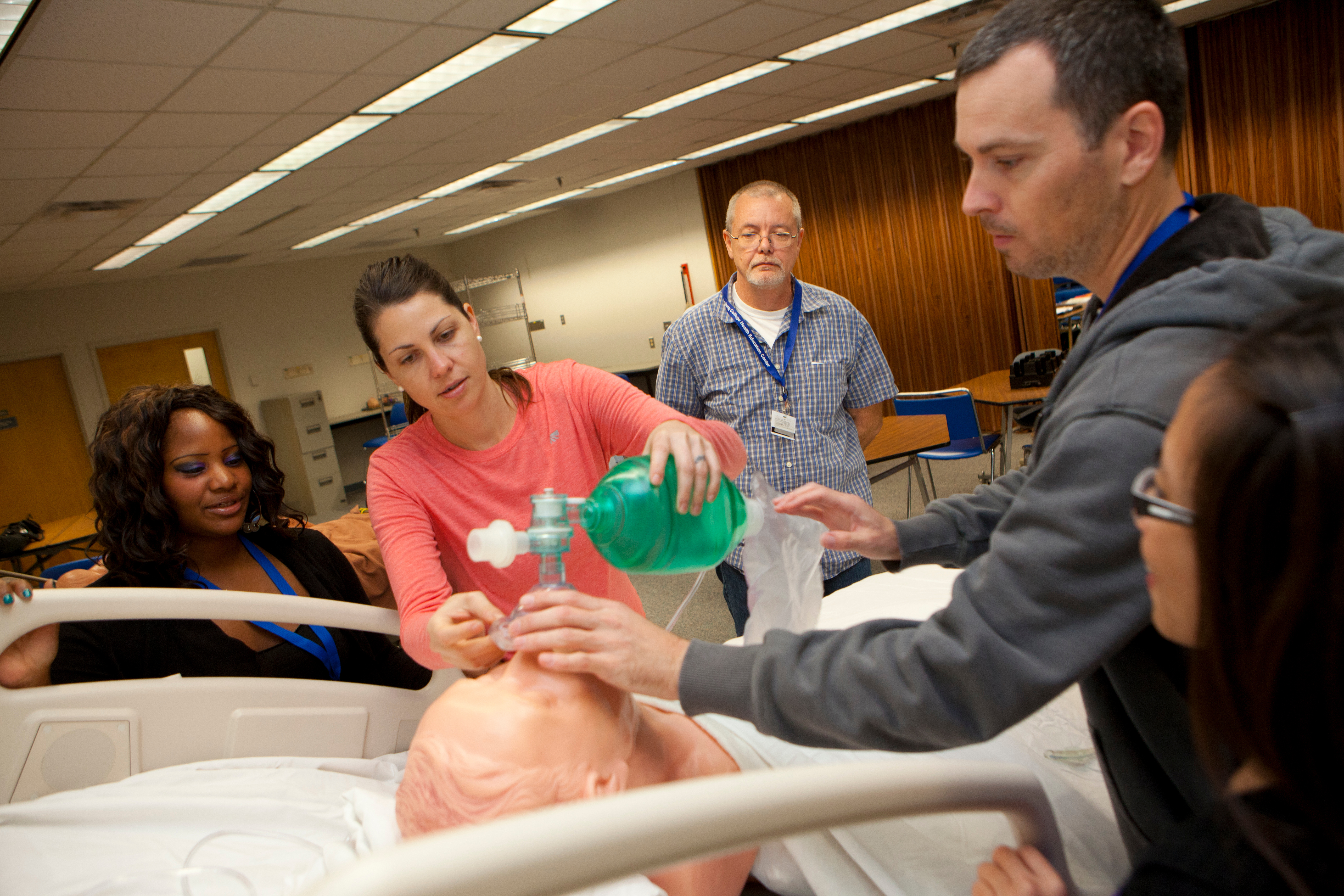
The broad-based curriculum will lead to advanced credentials, professional growth and development in leadership, management, education and research. Increasingly, hospitals prefer to hire practitioners with baccalaureate degrees for bedside clinical positions.
Courses include patient education and advanced capstone experiences tailored to practicing registered respiratory therapists’ needs and require no clinical or campus time. The capstone experience can be completed locally wherever students reside.
Secondary English Education with Reading and ESOL Endorsement Bachelor of Science degree
SPC continues to beef up its College of Education offerings with the launch of the Bachelor of Science in Secondary English Education with Reading and ESOL Endorsement.
“This degree will help fill the need for teachers in one of the most critical shortage areas in Florida,” said Heather Duncan, Associate Dean of the College of Education. “With other universities closing their programs, there will be a significant need for teacher training at the local level in our area.”
The Reading and ESOL (English for Speakers of Other Languages) endorsements will make graduates more marketable and well-prepared for their careers as middle or high school teachers, Duncan added. Another critical teacher shortage area in the state includes ESE (Exceptional Student Education), which the College also offers a bachelor’s degree.
Critical teacher shortage areas are defined as those certification areas where substantial proportions of teachers who are not certified in the appropriate field are being hired to teach such courses, where significant vacancies exist and where postsecondary institutions do not produce enough graduates to meet the needs of Florida’s K-12 student population.
This program joins two others that were created this past spring to meet growing workforce demand: the Prekindergarten/Primary Education (age 3 through Grade 3) Bachelor of Science degree and the Training and Development Advanced Technical Certificate.
The credentials will meet workforce demand for preschool teachers and training and development specialists, respectively.
Cloud Computing Associate in Science degree
SPC will become the first institution in the Florida College System to develop an Associate in Science degree in Cloud Computing. The program’s curriculum, established with input from other state colleges, will serve as the jumping off point for all 28 state colleges that plan to offer similar degrees at their institutions.
The degree will prepare graduates to manage information technology services like servers, storage, databases, and software that are offered over the internet, or “the cloud”.
“It’s an honor that the State Department of Education chose us to create this program as the bedrock for all the other state colleges,” said Norene Kemp, Dean of the College of Computer Information and Technology. “The colleges can customize their programs as they see fit based on the foundation we have laid.”
To develop the A.S. framework, the College relied on a $400,000 Cyber Florida grant that included funding for expanding IT pathways. The new degree builds on the Cloud Computing Certificate launched in Fall 2022 to meet the escalating need for highly skilled cloud practitioners like software and security engineers, system and network administrators, full-stack and Java developers, and cloud and software architects.
“The trend in cloud computing is one of the fastest growing sectors in IT, including web development, networking and software applications,” Kemp said. “Cloud computing has emerged as a key factor in software development. Now, software developers and system administrators are working together as they design, build, and deploy their applications.”
All core courses in the program will be offered online and students will work in a virtual environment so they can practice their skills in real time. Graduates will be proficient in the leading cloud services, including Amazon Web Services (AWS), Azure, and Google. Students can take their general education credits on SPC campuses if they choose.
Business certificates
Two new certificates in the College of Business will add to a growing body of business credentials aimed at giving graduates an edge in the global economy. The bachelor’s level Corporate Entrepreneurship and Innovation Advanced Technical Certificate teaches students how to innovate, adapt, and initiate change within established organizations, turning them into “intrapreneurs,” who can drive growth and development from within.
The Green Innovations and Social Entrepreneurship Certificate leans heavily into social enterprises and got its start during a summer sustainability program funded by a $25,000 VentureWell grant, awarded to colleges to expand and strengthen STEM innovation and entrepreneurship ecosystems.
“One of our goals is to support lifestyle entrepreneurs,” said College of Business Dean Emmanuel Hernandez-Agosto. “Most entrepreneurial programs focus on high-wage or growth areas like tech, but few focus on and take pride in helping these entrepreneurs.”
The programs join recent additions in the College of Business including the Business Analyst Specialist Advanced Technical Certificate launched last fall. The certificate, which builds on associate degrees, is particularly suited for technology students who want to transfer to business roles and for business students who want to expand their technical and data skills.
Posted in academics, bachelor's degrees, degrees, education | Leave a Comment »

The Aspen Institute College Excellence Program (Aspen) announced today that Dr. Tashika Griffith, Provost of the Clearwater Campus at St. Petersburg College (SPC), is one of 40 leaders selected for the 2024–25 Aspen Rising Presidents Fellowship. Applying lessons from over a dozen years of researching exceptional community colleges, the Aspen fellowship aims to select and prepare the next generation of presidents who can lead institutions to higher and more equitable levels of student success.
Many sitting community college presidents plan to retire in the next decade, creating an opportunity for college trustees and system heads to select leaders with the skills and knowledge to achieve better student outcomes. Aspen Presidential Fellows represent the next generation of college leadership: this incoming class of Aspen Rising Presidents Fellows is 58% women, and 55% are people of color. The institutions they represent are also diverse, located in 20 states, from small rural colleges to large urban campuses.
The fellows, selected through a competitive process, will work closely with highly accomplished community college presidents and thought leaders over 10 months to learn from field-leading research, examine demographic and labor market conditions in their communities, assess student outcomes at their colleges, and advance a clear vision for excellent and equitable outcomes for students while in college and after they graduate.
“With so many community college presidents taking or nearing retirement, Aspen has a heightened sense of urgency to develop new leaders committed to systemic change,” said Josh Wyner, executive director of the College Excellence Program. “Community colleges have a unique opportunity to advance the talent communities need and enable the economic mobility that draws many students to higher education. I am confident that these fellows can realize that promise — and in turn, advance the entire field — by taking the lessons from the highest performing colleges and preparing to bring those lessons to their first presidencies.”
“All of us at SPC are extremely proud of Dr. Tashika Griffith on her selection to the Aspen Rising President Fellowship,” said SPC President Dr. Tonjua Williams. “Dr. Griffith has made bold and strategic moves to eliminate barriers to student success, build community partnerships, and meet workforce needs. It is no surprise that she is among the few selected. Her drive and ability to bring about transformative change is unparalleled. We are proud to support her as she continues to help others gain economic mobility through education.”
Rising Presidents Fellows aspire to enter a college presidency within five years of completing the fellowship. As fellows, they join a network of over 350 forward-thinking peers — 175 of whom are sitting college presidents — who are applying concrete, grounded, and innovative strategies to meet student success challenges in their colleges.
“I’m honored to join the 2024-25 Aspen Institute Rising Presidents Fellowship, working with other transformational leaders nationwide to increase student success at St. Petersburg College and campuses across the country,” said Dr. Griffith. “During the 10-month fellowship, we’ll learn from national leaders, build a network of forward-thinking peers, and apply grounded and innovative strategies to meet student success challenges. I look forward to learning with the Aspen Institute College Excellence Program.”
The Aspen Rising Presidents Fellowship is made possible by the generous support of The Andrew W. Mellon Foundation, the Burton Family Foundation, the Charles and Lynn Schusterman Family Foundation, the College Futures Foundation, the Joyce Foundation, and JPMorgan Chase.
Visit the Aspen Institute website to see bios and photos of all 40 leaders.
Posted in St. Petersburg College | 1 Comment »
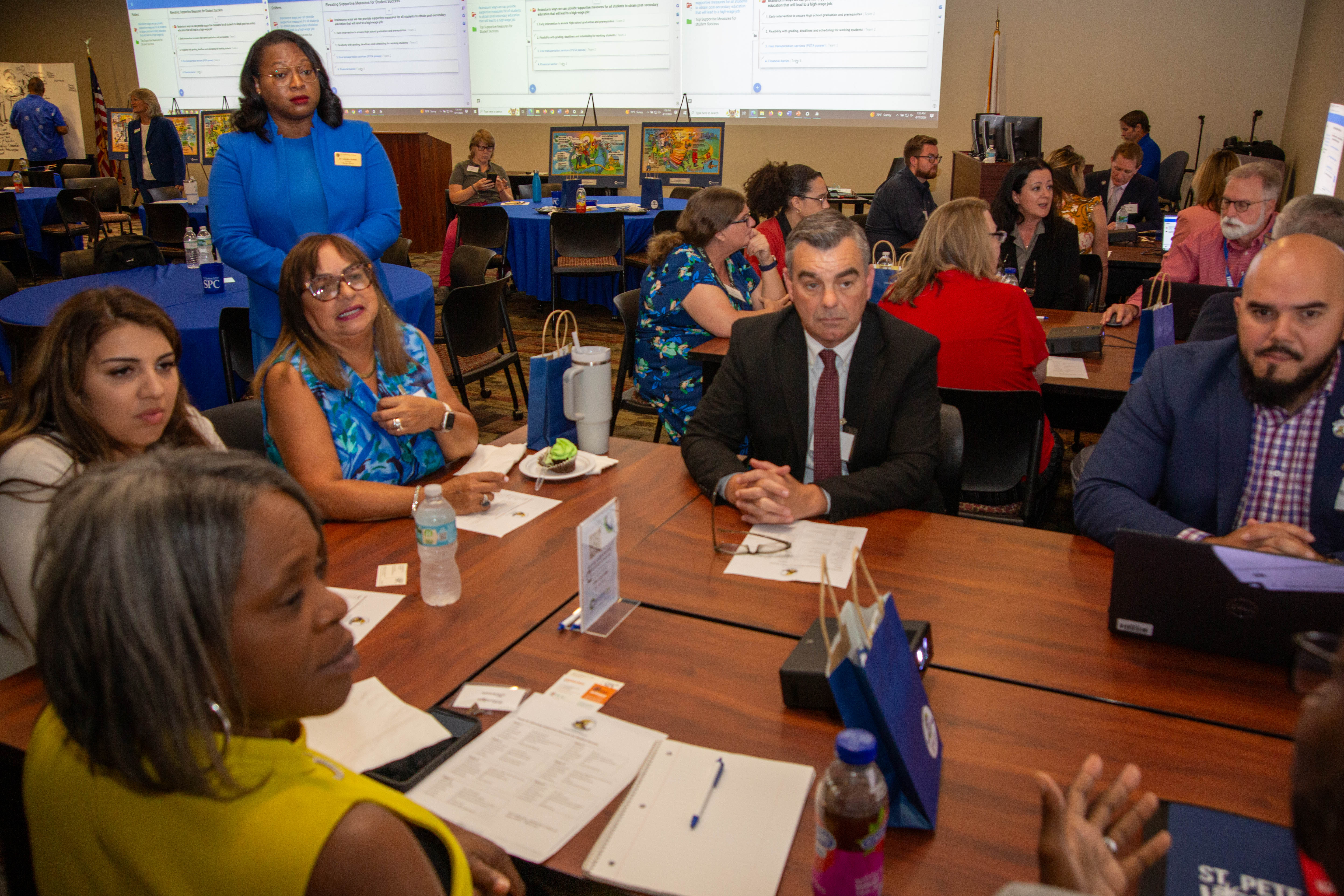
Area community leaders including representatives from the city of Clearwater and St. Petersburg College joined forces to identify and support new educational and workforce opportunities for students in a post-pandemic world at the Clearwater Community Ambassador Luncheon on April 17 on the College’s Clearwater Campus. The meeting addressed post-pandemic opportunities to help students and ensure their education stayed on track.
SPC hosted the meeting to support the Community Clearwater Ambassador Program, an initiative spearheaded by campus Provost Dr. Tashika Griffith. Newly elected Mayor of Clearwater Bruce Rector also attended the event to support the campus’s efforts to address education post-pandemic.
“The educational landscape has changed significantly over the last few years. It’s important for us to convene with our local government and community partners to ensure we’re meeting the current and future academic and workforce needs of the city of Clearwater,” Griffith said.
This effort is also supported by Project GAIN, which gets grant funding from the city of Clearwater. This project accomplishes multiple objectives such as summer bridge programming, student readiness for successful transitions from high school to postsecondary education, and STEM enrichment. Through Project GAIN, students who have fallen behind academically due to the COVID-19 pandemic will have access to evidence-based, innovative, and Clearwater-community-focused programming to help them gain learning in new and imaginative ways through partnership and engagement.



Community colleges suffered enrollment losses during the pandemic, in part because they disproportionately serve low- and middle-income. According to research, students also started choosing jobs over college as employers raised wages to attract workers and fill labor market shortages. However, initiatives such as Project GAIN are helping colleges such as SPC recover, though the conversation still needs to be had as hard work must be done to get to pre-pandemic enrollment numbers.
After the luncheon, Collaborative Labs at SPC led a facilitated experience with a display of their traveling artwork as inspiration. As the Collaborative Labs team approaches its 20th anniversary, they continue to showcase their work as the “consulting arm” of the College. The question for the event was: “What are some of the ways we can provide supportive measures for all students to obtain postsecondary education that will lead to a high-wage job?”
“Our vibrant city is not only filled with sunshine but also led by compassionate educators and leaders who are committed to aligning students with a strong and supportive framework for academic and future career success,” said Brenda Thompson, Project GAIN Grant Coordinator.
Posted in Campuses, Clearwater | Leave a Comment »
The College encourages attendees to discover and connect on SPC campuses
Discover what St. Petersburg College can offer you at Explore SPC. Attend any of the on-campus or webinar Explore SPC events and your $40 application fee will be waived! The live webinars will be held April 16-18 from noon to 1 p.m. and 6 to 7 p.m. On-campus events take place April 22-25 from 4 to 7 p.m.
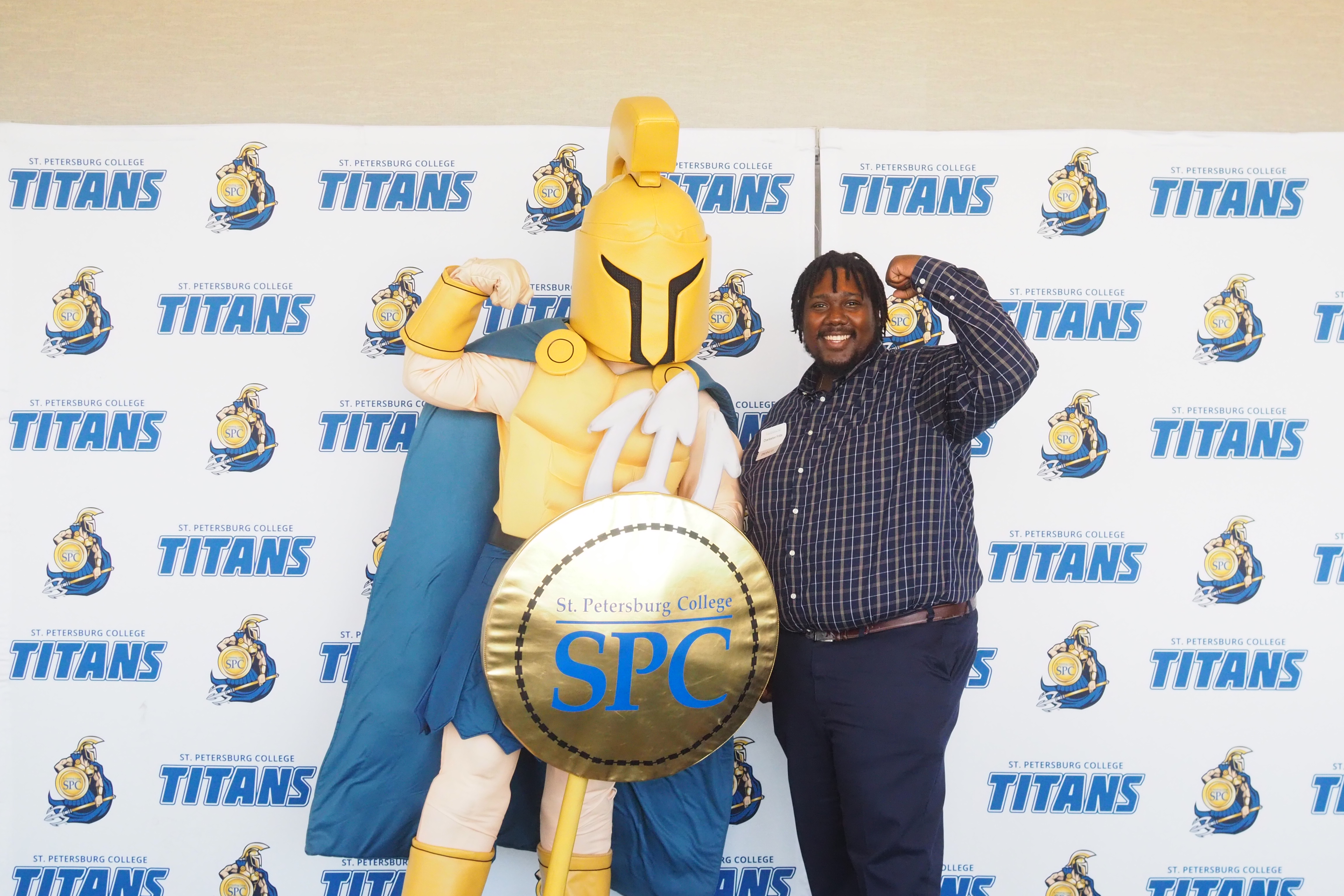
“At Explore SPC, we are opening our doors for everyone to discover the transformative power of education in creating a more equitable and prosperous community,” said Jacob Wortock, Director of Recruitment and Enrollment Services. “We want to show our guests our commitment to nurturing future leaders, innovators, and changemakers by introducing them to our award-winning faculty and staff who will play a significant role in shaping their future.”
U.S. News & World Report’s 2024 study ranked SPC first in the Tampa Bay region for Best Online Bachelor’s Program and Best Online Bachelor’s Programs for Veterans in the 2024 study. “St. Petersburg College is proud of our faculty and staff and the quality of education and sincere support we provide for our students,” said Dr. Matthew Liao-Troth, SPC’s Vice President of Academic Affairs. “As an innovator of online education in the Florida College System, we continue to improve the student experience with professional development for our faculty and staff and continued investment in our online learning environment for our students. We know our students come to us for better jobs and better lives, and we strive to exceed their expectations.”
Learn more about Explore SPC at spc.edu/explore24.
On-Campus Events
Go to any of the on-campus events and explore the 200-plus degree, certificate and transfer programs. You can also submit important admissions documents and learn more about how you can pay for college. SPC staff will be there to provide campus tours and allow participants to explore campus life. You can also learn about the various course format options that are available depending on how you want to take classes — on campus, online, SPC LIVE Online, and more. Your $40 college application fee will be waived, and you can get ready to enroll in this year’s Summer or Fall Term.
All on-campus events take place from 4 to 7 p.m.:
- April 22: Clearwater Campus, LA Building, 2465 Drew St.
- April 23: St. Petersburg/Gibbs Campus, SU Building, 6605 Fifth Ave N.
- April 24: Seminole Campus, UP Lobby, 9200 113th St.
- April 25: Tarpon Springs Campus, Administration Building, 600 E Klosterman Road
Explore SPC Webinars
Can’t attend in person or looking for a more convenient option to Explore SPC? Take part in a webinar and receive the $40 application fee waiver when to apply to SPC.
Posted in St. Petersburg College | Leave a Comment »
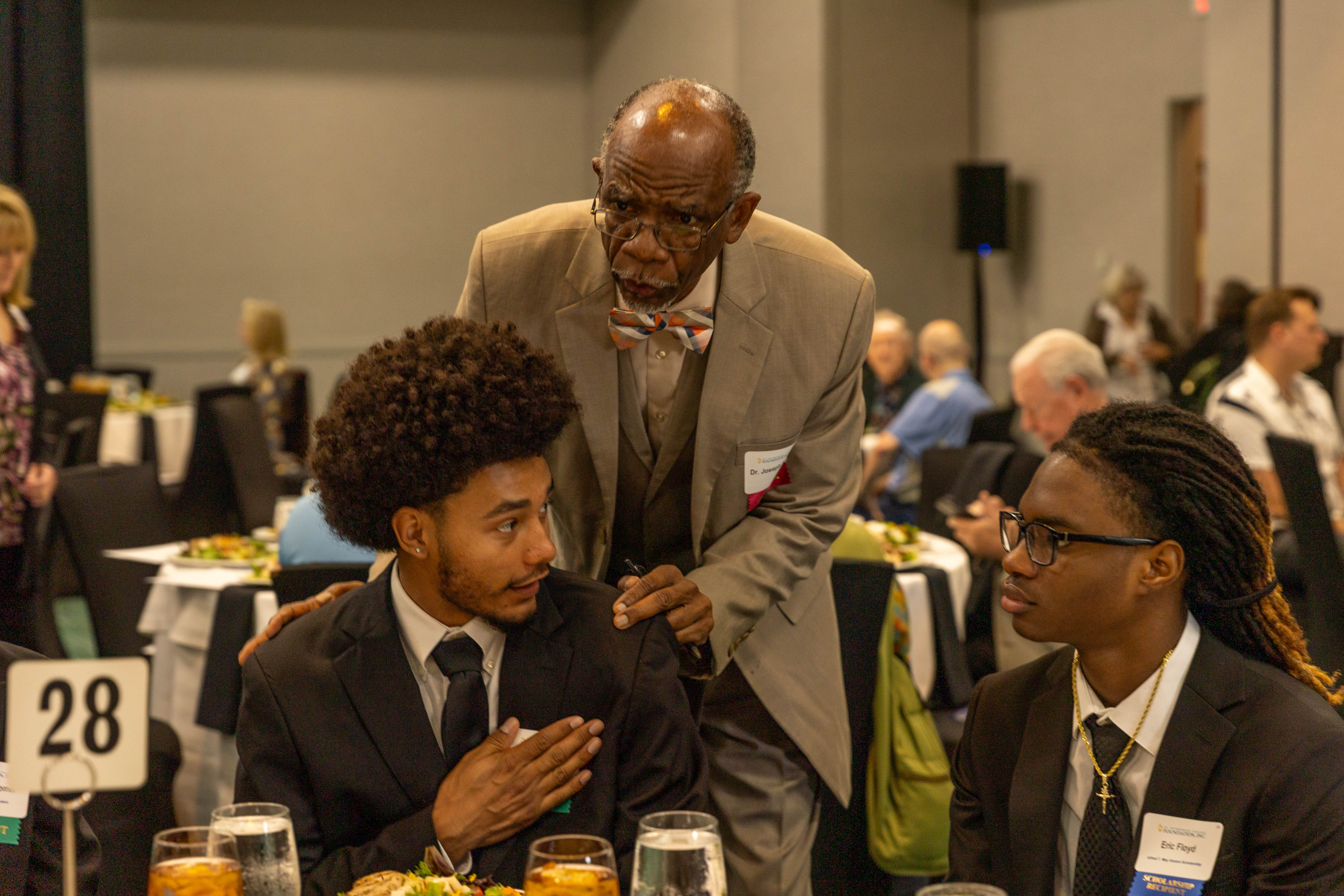
On Thursday, April 4, the St. Petersburg College Foundation hosted the 24th annual Donors and Scholars Luncheon. The luncheon is an opportunity for those who give to the SPC Foundation to sit down with SPC students who have benefited from Foundation scholarships. Over 350 donors and scholars joined the Foundation at the Hilton St. Petersburg at Carillon Park for music, food, and some moving talks from SPC scholars and supporters. The Foundation supported the College with almost $5 million in funding this year!
This year, the SPC Foundation awarded scholarships to over 4,000 students representing over $2.7 million in awards. Programs at the College also benefited by receiving over $2 million in private support. Distinguished SPC alumna and former astronaut Nicole Stott talked about why people want to support SPC and its impact on everyone’s lives.
“I am so grateful this place existed because I wouldn’t be standing here talking to you without SPC,” she said. “I am so thankful, and to hear the stories I heard today and the vibe that I felt in the room today, there is such a sense of this appreciation of what it means to lift other people up. And I felt that at SPC, and everything that was spoken about today, beyond the money of it, is huge. Having the services and the people around, like Dr. Williams, asking you, ‘Are you okay?’ Do you have what you need?’, that’s been here forever. And I think people appreciate that and it’s why they want to support what goes on here at SPC.”
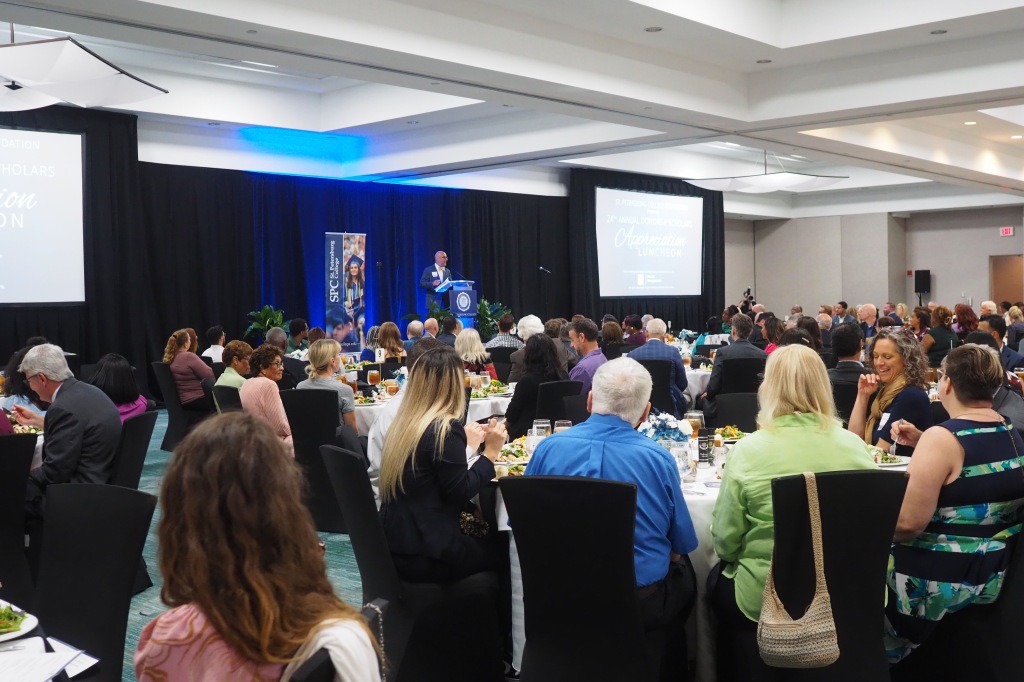
Jesse Turtle, SPC’s Vice President of Institutional Advancement, gave a warm welcome and his traditional “I LOVE St. Petersburg College,” to the room. He shared how the donors’ generosity not only changes the lives of SPC students but creates generational change. He shared that the fundraiser “shattered” previous records and raised over $12 million. He thanked the Hough Family Foundation for their challenge grant of $5 million to aid in a $10 million renovation campaign for the Palladium at St. Petersburg College.
Turtle also thanked Mary Mitchell Avery and brother Dewey Mitchell for their $1 million donation to the Leepa-Rattner Museum of Art at St. Petersburg College at the Tarpon Springs campus. Turtle introduced De Anna Sheffield Ward, Vice President of Media & Communications for the Tampa Bay Rays and Rowdies, and gave the mic to the event’s MC.
Sheffield Ward thanked the crowd and welcomed everyone to the annual event. She started off on a personal note stating, “On a personal note, “I would not be where I am today, had I not had a scholarship. I was able to focus on school and not worry about how I was going to pay. You are making a generational change by allowing your investment to pave the way for these students.”
She then wasted no time mentioning SPC’s accolades such as being selected as a First Scholars Network Member by the Center for First-Generation Student Success. SPC was recognized for its commitment to improving experience and advancing outcomes for first-generation students. Sheffield-Ward also talked about SPC’s Promise Scholarship and its success. Last year, the scholarship served over 450 students across five high schools, and it has since expanded to eight high schools in 2024.

“SPC remains steadfast in building lasting connections and enriching the tapestry of our community,” Sheffield Ward said. “Our theme today is one of celebration and gratitude. We celebrate the hard-won achievements of our students — so many of whom have shown tenacity in the face of numerous demands and some alarming odds as they pursue their educational goals. And we extend our gratitude to the amazing support provided by our donors and community partners.”
She thanked the RBC Wealth Management team, the SPC Foundation Board of Directors, the SPC Board of Trustees, esteemed elected officials, ambassadors from the Mexican Consulate in Orlando, and of course, the leader of SPC, President Dr. Tonjua Williams, for making “it possible for the College to educate, empower, and engage students, providing the skills that lead to a high wage job.”
“It is through continuous involvement that our students have the opportunity to gain the skills and knowledge that will change their lives forever,” she said.
Next, Dr. Joseph Smiley, who has dedicated over four decades to SPC and serves as the Dean of Social & Behavioral Sciences, delivered the invocation. He expressed how thankful everyone is to the institution of SPC. He used words like marvelous, generous, and supportive, to show how blessed everyone truly is to be celebrating everyone in the room. Smile has profoundly impacted the lives of countless students and colleagues, so his words rang true.
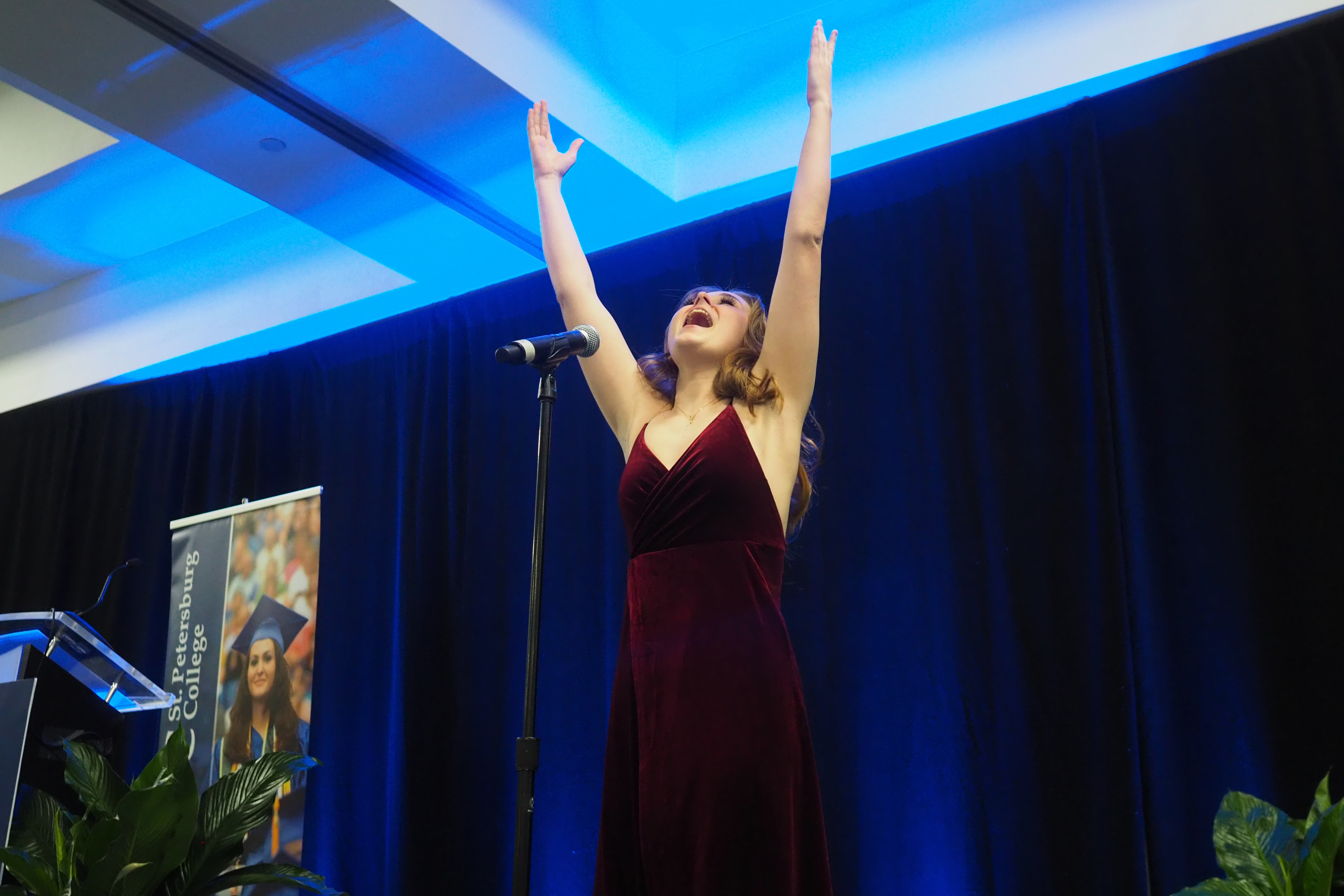
The program broke for lunch and during that time, SPC student and scholarship recipient Elizabeth Daley performed “Gorgeous” from The Apple Tree. Daley is a shining example of SPC’s music program as she wowed the crowd by hitting all the high notes and showing off her talent that is cultivated at the institution.
The next speaker, donor and Foundation Board Member Bertha L. Burruezo, Esq., asked donors “What is your why?” Burruezo told the story of her Honduras grandmother and explained that she had one thing to give to her: unconditional love. And it was this love that brought her back to Florida to restart her education. She got her GED, AA, bachelor’s, and master’s degree all thanks to this love. But she wasn’t done, and through the generosity of donors, she fulfilled one more dream. She got a full ride to Stetson University in St. Petersburg where she graduated at the top of her class.
Burruezo knows her story doesn’t end there, in fact, she opened her own law firm that is going 17 years strong. She told her accolades to allow donors and scholars to share their why because it takes a community and love to allow others to reach their dreams and economic mobility. She is proof that it is worth it.
Burruezo also announced the new 100 Strong initiative. 100 Strong, Women Empowering Women is a new initiative at SPC designed to “help others achieve their academic dreams and be successful in their futures.” Those involved want to empower every student enrolled at SPC and harness the power of the Pinellas County Women’s community to make a difference in the lives of students through philanthropy, education, and engagement. The members honor their pasts to support the students of today, and to change their future.

Alumna Sandy Ho took the stage and told the crowd that she had to go off script for a second. She asked that she “strive to have the confidence that Elizabeth (Daley) has.” She also told an antidote of how she is listed as an alumna of the class of ’88 in the program. Her son told her, “Mom, you graduated in the 1900s, as she replied, ‘Yes, yes I did.'” She told the story of how she found SPC and set foot on the Clearwater Campus.
Ho was encouraged to explore and take an array of classes. This advice opened her world to opportunities she never thought possible. She graduated with her AA and transferred to Florida State University where she began down an impressive career path that led her to her esteemed position as the Vice President of Human Resources at Great Bay Distributors. She talked of her journey to continue to be a lifelong learner all thanks to her roots at SPC.
Scholarship recipient Shalawa Morgan, soon to be the Class of 2024, gave the student perspective on receiving a fullride scholarship to SPC to pursue her associate’s degree in interdisciplinary social sciences, something that “filled her with profound gratitude.”
“Gratitude for the journey that has led me to this moment, for the nuances that have shaped me, and above all, gratitude for the incredible support of my community, including The National Council of Negro Women St. Petersburg Chapter and the Foundation’s generosity that have made my dreams a reality,” Morgan explained.
Morgan began her educational journey in Georgia and had to leave higher education because the “reality of financial burdens of education” caught up with her. She told the heartbreaking story of how she lost her brother to gun violence, but instead of drowning, she rose to every occasion presented to her. Morgan moved to Florida to restart her life and knew she needed more than her current position as a leasing agent. She wrote and published her first book “The Butterfly and the Bullet,” and through coping with her hardships, Morgan transitioned to full-time entrepreneurship.
“As I reflect on my journey, it has been defined by consistency, resilience, determination, and a steadfast dedication to positively impacting the world. There is no place I’d rather pursue my Associate’s degree than at SPC,” she said. “Scholarships like these are nothing short of magical for students like me. This scholarship has empowered me to foster my mission effectively and has reaffirmed my belief in the power of education. With these tools, I intend to continue my education at USF. Let us embrace the notion that a delay is not a denial and that our presence here serves as a testament to the belief that we are worthy of investments beyond measure.”

Morgan passed the mic to SPC’s President, Dr. Tonjua Williams, who looked out to the crowd with pride. Dr. Williams began her career at SPC 36 years ago, and as the seventh president of the College, she leads SPC into the future. “I feel gorgeous, I feel beautiful,” she quipped as she praised Daley’s performance and applauded Morgan’s triumphs. “This is SPC.”
Dr. Williams talked about SPC’s mission to get students into high-wage jobs and better their futures. An example is scholarship recipient Eleftherios “TJ” Venieris, who will graduate in December with a bachelor’s degree in paralegal studies. He stated, “Receiving this scholarship just means the world to me. It has shaped me into being a better example of myself. It has led me to achieve so many opportunities including landing my first job offer in over 20 years. To the foundation, I can’t thank you enough. It is one of the greatest opportunities that any student could ask.”
This drives home Dr. Williams’ point that she tells people to stop telling students that college is not for everyone.
“A college degree might not be but a certificate is. How do you level up if you have to decide between eating and learning? Working and learning? Why can’t we do both? Why can’t we give them what we need?” she explained. “A scholarship is critical for success for those who don’t have any tools in their toolkit. And we build better families for better generations to come, Let’s go Titans!”
Interested in becoming an SPC Foundation donor? Check out their web page for information on ways to give.
Posted in St. Petersburg College | Tagged college, education, financial aid, scholarship, Scholarships | 1 Comment »
-
SPC Sites
• SPC Homepage
• SPC Blogs
• President's Site
• Emergency Site Share This Blog

-
Contact Us
Have a question? Email
spc_news@spcollege.edu.
 St. Petersburg College News